

Chocolate Production Line
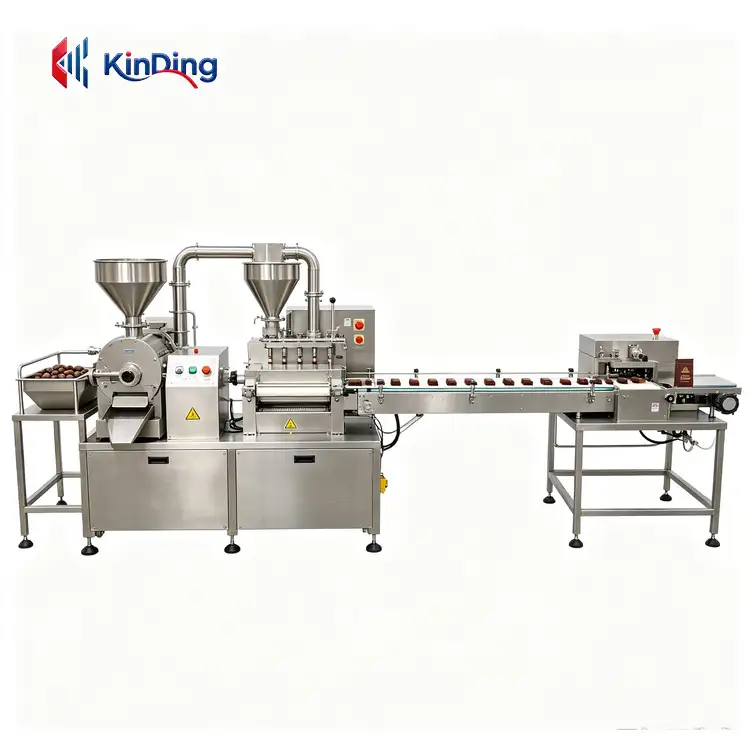
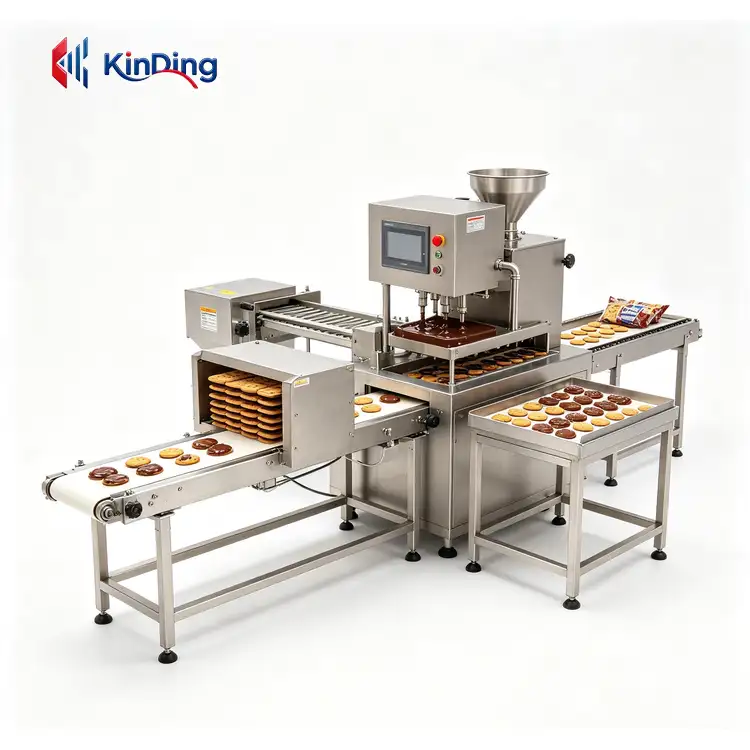
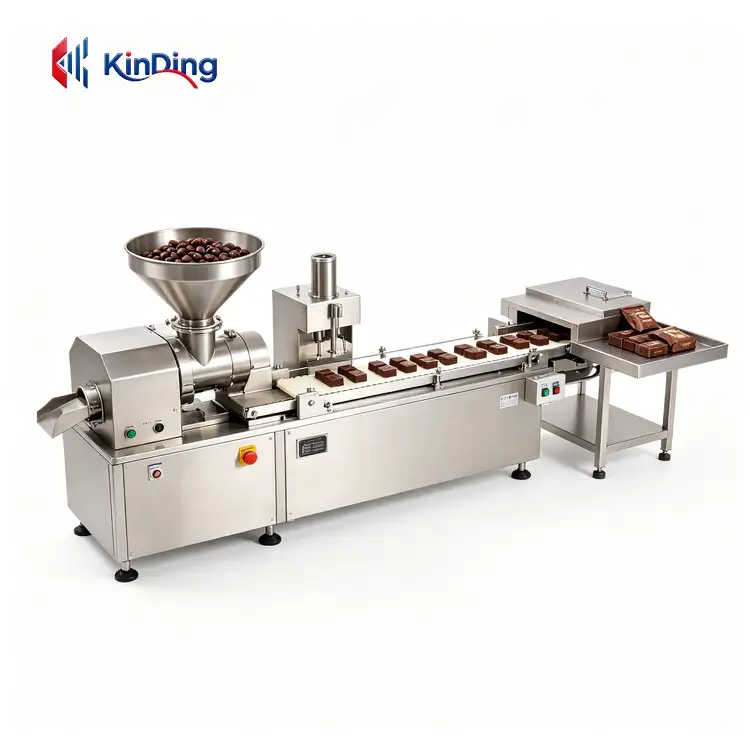
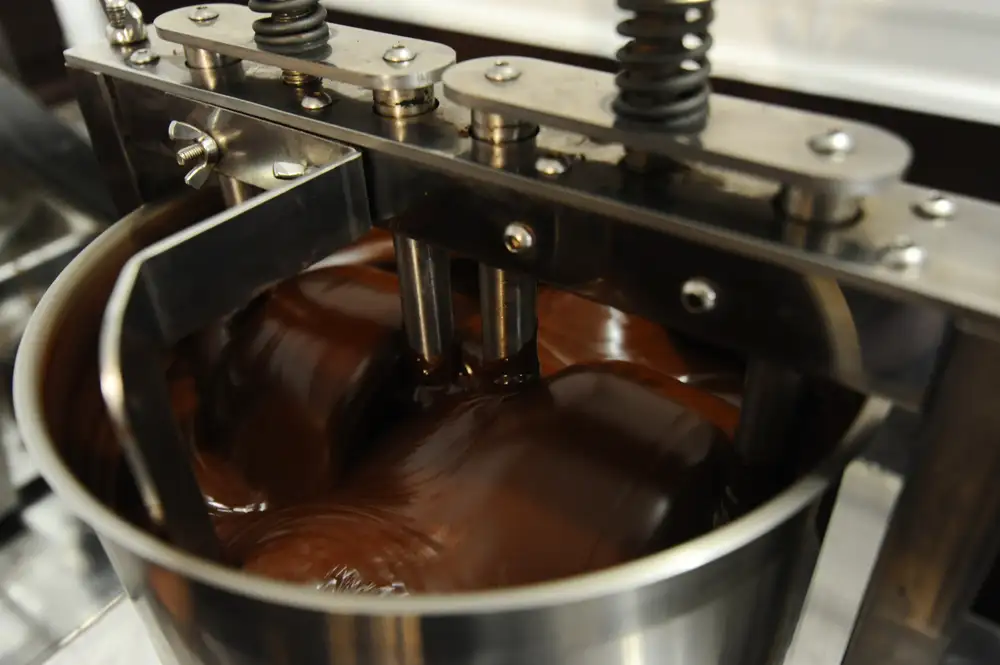
The Kinding chocolate production line is designed for large-scale production of chocolate sauce, chocolate slurry and chocolate products and the core equipment includes a fine grinder, an insulated emulsification tank, a chocolate storage tank and a temperature control system. The Kinding sanitary vertical colloid mill can grind chocolate slurry to a micron-level fineness, ensuring uniform and fine texture without any particle sensation in the finished product. The platform-type insulated emulsification tank features a three-layer insulation structure, with a temperature drop of no more than 1℃ per hour within a 50℃ temperature difference, making it suitable for long-term constant temperature storage and fine emulsification of chocolate slurry. Purchasing Kinding chocolate production equipment can enjoy professional support from single machine selection to complete line integration. The equipment complies with the ISO 9001 quality system standard. Please contact us to obtain detailed technical solutions and quotations for the chocolate production line.
Send Inquiry
Product Description
A chocolate production line is, in simple terms, a process that takes basic raw materials such as cocoa beans, sugar powder, milk powder, and cocoa butter, and through a scientifically arranged series of procedures, continuously and automatically turns them into stable finished chocolate products. Its greatest value lies not in simply putting several machines together, but in making the entire manufacturing process a "flowing process": starting from the raw materials entering the workshop, each step is completed under controlled temperature and time conditions, and the final chocolate produced has a uniform luster, crispness, and taste.
Let's walk through this production line and see how it works. The first step is raw material processing and mixing. Cocoa beans are first sorted and roasted to remove impurities and enhance their aroma; then, they are automatically measured and mixed with other auxiliary materials such as sugar powder, milk powder, and lecithin, and enter the grinding equipment. Through roller or ball grinding, the cocoa solids are ground into a fine paste of about 20-30 micrometers.
At this point, the mixture has taken on the shape of a chocolate paste, but the taste is still rough and the flavor is not soft enough. Therefore, the mixture is sent to the fine grinding and refining system. In the fine grinder, the particles are further ground down; in the refining tank, the mixture is stirred at a constant temperature for a long time, allowing acidic substances to evaporate, the oil to evenly coat the particles, and developing a rich and round flavor. This step often takes several hours to several tens of hours and is the key stage that determines the taste of the chocolate.
The refined mixture cannot be directly poured yet; it must undergo temperature adjustment. Temperature adjustment is an extremely important step in chocolate production: through precise temperature curves of continuous cooling, crystallization, and re-heating, cocoa butter forms stable crystals. Only when the temperature adjustment is done properly will the chocolate, after demolding, present a beautiful luster, a crisp breakage sensation, and a smooth melting sensation on the palate.
The temperature-adjusted mixture then arrives at the pouring station. The pouring machine injects the chocolate into molds at precise doses. If producing a sandwich product, it will also simultaneously complete the filling and bottom sealing. Subsequently, the loaded molds on the conveyor belt enter the cooling tunnel, where they are cooled and shaped in stages over 8 to 15 minutes under zone temperature control. After cooling, the molds are gently shaken, and the chocolate is demolded, followed by visual inspection and metal detection to remove defective products. Finally, it is packaged, boxed, and stacked by the automatic packaging machine. Thus, a batch of finished chocolate is born.
Throughout the entire operation process, operators do not need to frequently intervene manually. Each production line is equipped with a digital control system, allowing real-time adjustment of temperature, pressure, viscosity, and speed, and recording complete data for each batch. The automatic cleaning system makes changing product types and daily cleaning simple and reliable. The entire production line uses food-grade stainless steel, with closed piping and inclined self-draining design, ensuring hygiene standards meet strict international certifications.
More importantly, this production line is not fixed. It adopts a modular structure, allowing customers to flexibly combine according to their product types and development plans - whether producing truffle chocolate, sandwich chocolate, or chocolate-coated cookies, upgrading and expanding production capacity, or moving from a handmade fine line to an industrial scale, all can be achieved by adding or reducing corresponding modules. Equipment suppliers usually also provide a complete set of services from workshop layout, formula debugging, material testing to installation training and after-sales maintenance, which is a "turnkey project", giving customers not only equipment but also a complete production line that can produce products and generate benefits.
For chocolate brands, choosing a production line is essentially choosing a reliable process implementation method. A well-performing and stable chocolate production line can transform formula inspiration into stable mass-produced good products. In every sweet detail, it reflects the deep integration of engineering and food science.
Related Category
Stainless Steel Tank
Sanitary Pump
Mixing and Emulsification
Colloid Mill
Fruit and Vegetable Machine
Sanitary Manhole
Sanitary Valve
Sanitary Pipe Fittings
Filling Machines
Packaging Machines
Production Line Solutions
Send Inquiry
Please Feel free to give your inquiry in the form below. We will reply you in 24 hours.