

Facial Cleanser Production Line
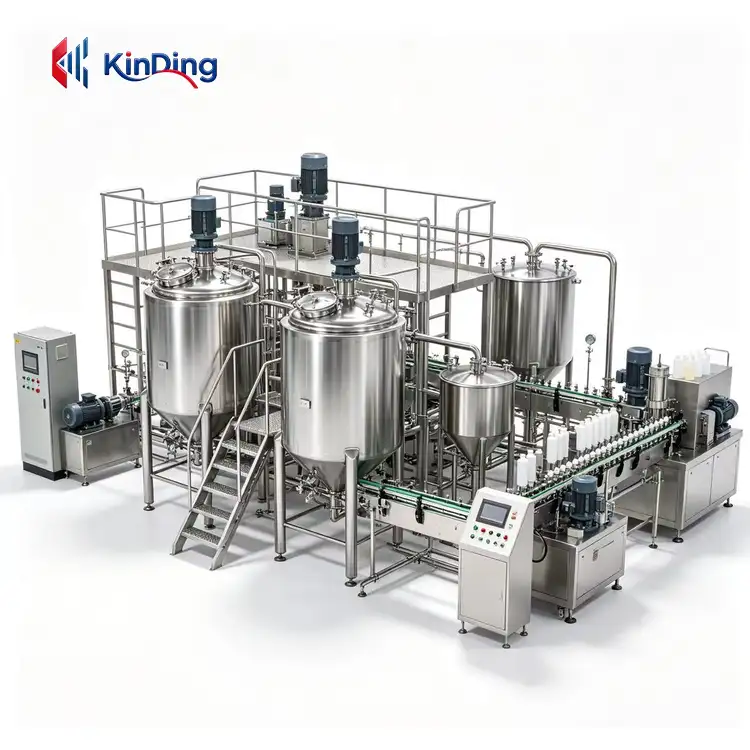
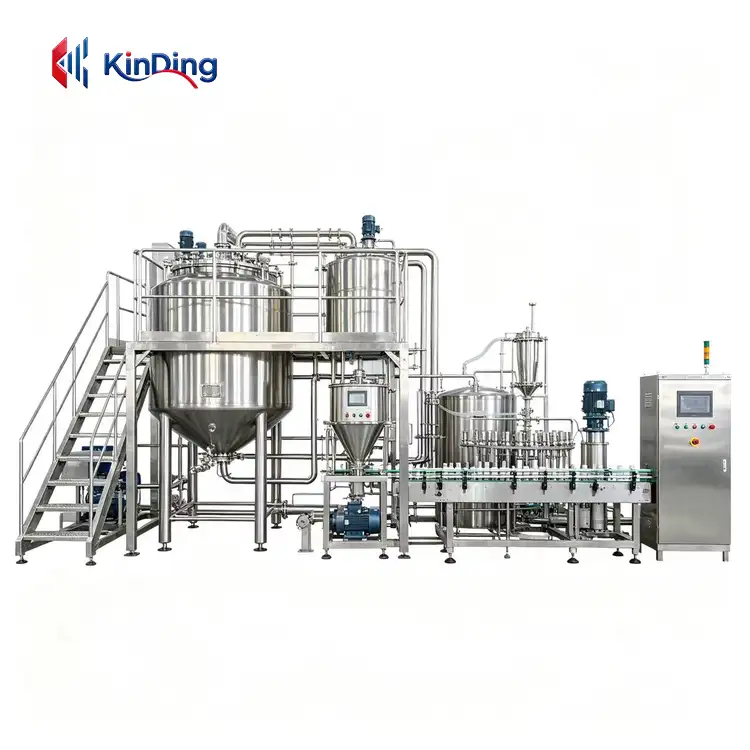
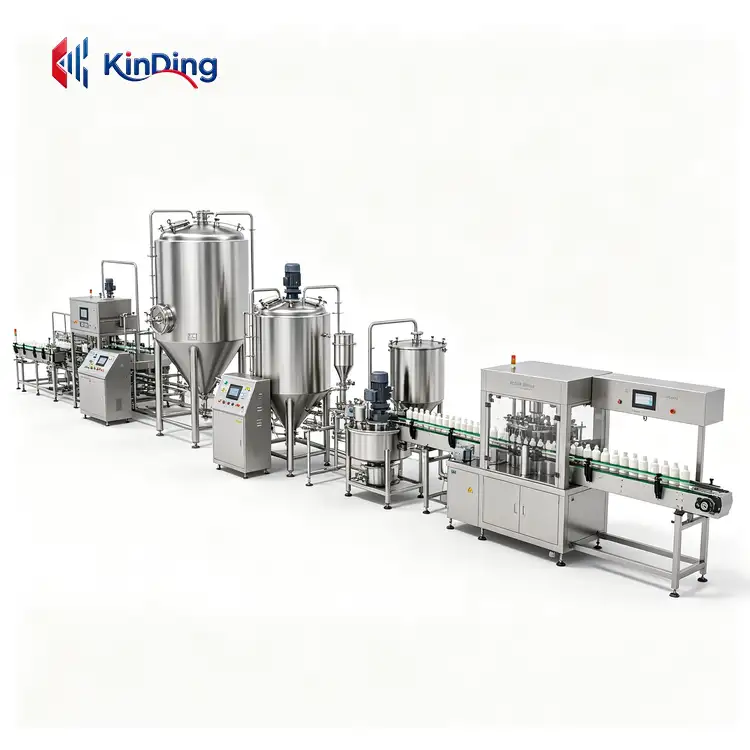
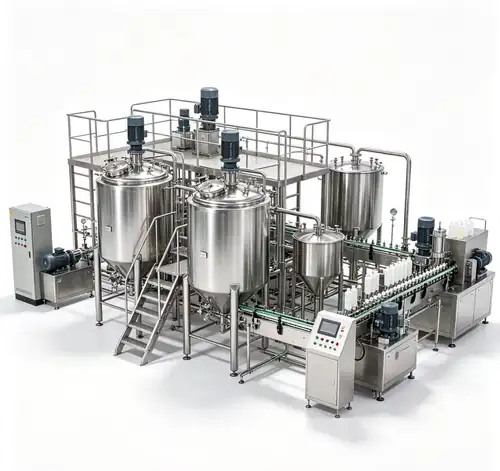
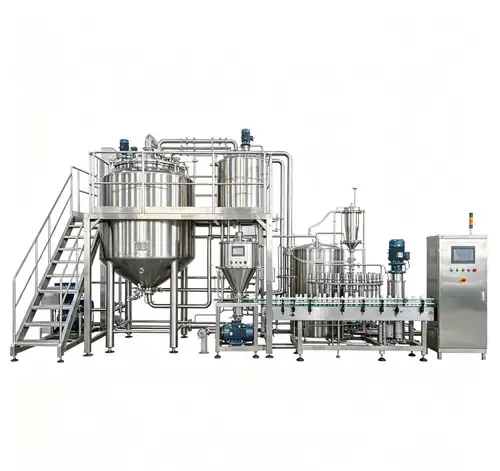
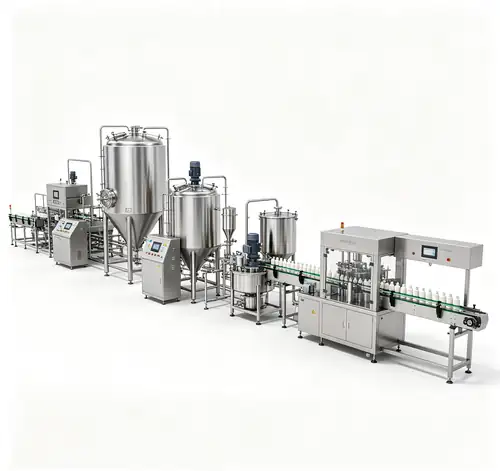
The Kinding facial cleanser production line is specifically designed for facial cleansing products such as facial cleansers, facial cleansing creams, and facial cleansing mousse. The core equipment is a vacuum homogenization emulsification tank, which integrates wall scraping stirring, high-speed shear homogenization, and vacuum defoaming functions. The facial cleanser products have extremely high requirements for fineness and batch stability. The Kinding circulating emulsification tank has a high shear emulsification head rotation speed of 0-3000 RPM, combined with a frame-type stirring paddle to drive the entire tank of materials to form a strong axial and radial circulation, ensuring that each drop of material passes through the shear zone multiple times, and the emulsification particle size distribution is uniform. Welcome to contact us for the technical parameters and exclusive quotations of the facial cleanser production line.
Send Inquiry
Product Description
If you are planning to enter the skincare lotion production sector, equipment selection is the first threshold that determines product quality, production capacity, and compliance. The skincare lotion category encompasses various formulations such as soap-based cleansers, amino acid cleansers, cleansing mousse, emulsified cleansers, etc. Different formula systems have significantly different requirements for equipment. This article, from the perspective of equipment production, outlines the core components and key selection factors of the skincare lotion production line, helping you establish a systematic understanding of production equipment.
Core logic of the production line: What equipment is needed for skincare lotion manufacturing?
Skincare lotion production is essentially a process involving the mixing of multiple phases, emulsification, homogenization, and temperature control. Depending on the formulation, there are significant differences in equipment requirements:
Soap-based cleansers need to address the problem of extremely thick paste during the saponification reaction and the difficulty in eliminating bubbles. The equipment for the saponification process has high energy consumption, and if the bubbles brought in by the stirring cannot be effectively removed, it will lead to inaccurate filling volume, waste of packaging materials, and other issues. Amino acid-based cleansers place more emphasis on gentle emulsification and have higher requirements for temperature control and the precision of stirring speed. Cleansing mousse involves the dissolution and homogenization of surfactants, and some processes require enzymatic reactions to be carried out under a temperature range of 30-50°C, which demands strict temperature control accuracy.
Regardless of the formulation, a complete skincare lotion production line typically includes three core processes: feeding and pre-treatment, formulation and emulsification, filling and packaging.
Core formulation equipment: The heart of the production line
The equipment in the formulation process determines the texture, stability, and user experience of the skincare lotion, and is the most worthwhile investment part of the entire production line.
Function integration of the homogenization and stirring tank
Modern homogenization and stirring tanks (also known as emulsification tanks or reaction tanks) integrate heating, cooling, stirring, homogenization, emulsification, and vacuum degassing. It is the core equipment of the liquid washing production line. Taking the industry's mainstream configuration as an example, a complete homogenization and stirring tank consists of the following systems: The tank body is made of 304 or 316L stainless steel material, polished mirror finish, with no hygiene dead corners. The volume ranges from 50L for laboratory level to 5000L for industrial level, and the selection is based on your batch production capacity planning. The tank body needs to be equipped with sight glasses, lamp holes, and sampling ports to facilitate observing the material state and sampling testing.
The stirring system usually adopts a dual-stirring structure: the main stirring is a slow scraping wall type (anchor type or frame type), rotating along the tank wall to sweep off the adhered materials on the wall; the auxiliary stirring is a high-speed dispersing paddle, used for rapid dispersion of raw materials. There is a patented design that uses rod-shaped stirring paddles and frame-type stirring components to reverse rotation together, significantly shortening the time for homogenization and uniformity of each raw material. The speed is adjusted by variable frequency, generally ranging from 0 to 42r/min.
The homogenization system is the key component that determines the fineness of the product. The high-speed shear homogenizer adopts a stator-rotor structure, with a rotational speed of up to 3000r/min or more, using powerful shearing to break down raw material particles to 200nm-2μm, achieving oil-water fusion and material dispersion, avoiding product stratification and sedimentation. Some high-end equipment is equipped with bottom-mounted or pipeline-type emulsification heads, further improving the emulsification efficiency.
The temperature control system uses the tank body's shell to achieve heating and cooling. The heating method can be steam heating or electric heating, and cooling uses a cooling water circulation. The temperature control range is usually from room temperature to 100°C, and the dissolution of surface active agents requires heating to 60-70°C, while fragrances and heat-sensitive components need to be added after cooling to 35-45°C. For soap-based systems, the heating of the water phase needs to reach 80-90°C to ensure complete neutralization reaction.
The vacuum system's role is often underestimated. The vacuum pump controls the vacuum level in the tank at -0.06 to -0.09MPa, removing bubbles generated during stirring and preventing product cavitation or stratification after filling, while accelerating raw material dissolution and preventing oxidation.
Auxiliary Mixing Equipment
For multi-variety and small-batch production, it is recommended to equip auxiliary mixing tanks (100-500L) for pre-mixing or small-scale trial production of different formulations, to avoid frequent cleaning of the main tank. Water phase cookers and oil phase cookers are also common configurations, used for separately pre-processing water-soluble and oil-soluble raw materials. Some designs can directly transfer the oil phase container into the water phase container, using heat transfer to simultaneously heat, saving heating equipment.
Filling and Packaging Equipment: The Bottleneck of Production Capacity
The filling process after formulation completion directly determines the production line efficiency and product appearance.
The packaging form of facial cleansers is mainly in tubes, and the filling equipment needs to match the viscosity characteristics of the product. For high-viscosity facial cleansers, a servo-driven strong filling system is required to ensure filling accuracy and consistency, avoiding product waste or leakage.
Sealing methods are selected based on tube materials: plastic tubes and laminated tubes are commonly sealed with hot air, while aluminum tubes use folding sealing. The sealing quality directly affects the product's shelf life and appearance.
Key Decision Points in Equipment Selection
- Material and compliance are the bottom line.
- Temperature control accuracy determines the degree of formula restoration.
- Vacuum degassing capacity is often overlooked but is crucial.
- Ease of cleaning affects the efficiency of changing production lines.
Predicting Common Problems in Production from the Perspective of Equipment
Insufficient emulsification leading to stratification: If the oil-water emulsification of facial cleanser products is insufficient, stratification will occur after storage. The core lies in the shear efficiency of the homogenizer head and the homogenization time. When selecting, it should be matched with the homogenization power according to the product viscosity.
Filling accuracy fluctuation: When filling high-viscosity materials, dripping or leakage may occur. Servo-driven filling systems have higher precision than traditional pneumatic systems, and combined with drip-proof filling nozzles, this problem can be improved.
Batch-to-batch quality differences: When the texture of the same formula varies between batches, it often stems from the uniformity of temperature control or the fluctuation of stirring speed.
The equipment selection for the facial cleanser production line is essentially finding a balance between formulation characteristics, production capacity planning, compliance requirements, and investment budget. The homogenization capacity, temperature control accuracy, and vacuum degassing performance of the core mixing equipment determine whether the product can reach the designed quality; the precision and speed of the filling equipment determine the efficiency and cost of commercial production.
It is recommended to conduct on-machine tests with actual formulations before equipment procurement to verify the real performance of the equipment in terms of product viscosity, emulsification effect, and filling adaptability. Equipment is the carrier of the formulation, choosing the right equipment means the product is half successful.
Related Category
Stainless Steel Tank
Sanitary Pump
Mixing and Emulsification
Colloid Mill
Fruit and Vegetable Machine
Sanitary Manhole
Sanitary Valve
Sanitary Pipe Fittings
Filling Machines
Packaging Machines
Production Line Solutions
Send Inquiry
Please Feel free to give your inquiry in the form below. We will reply you in 24 hours.