

Hand Sanitizer Production Line
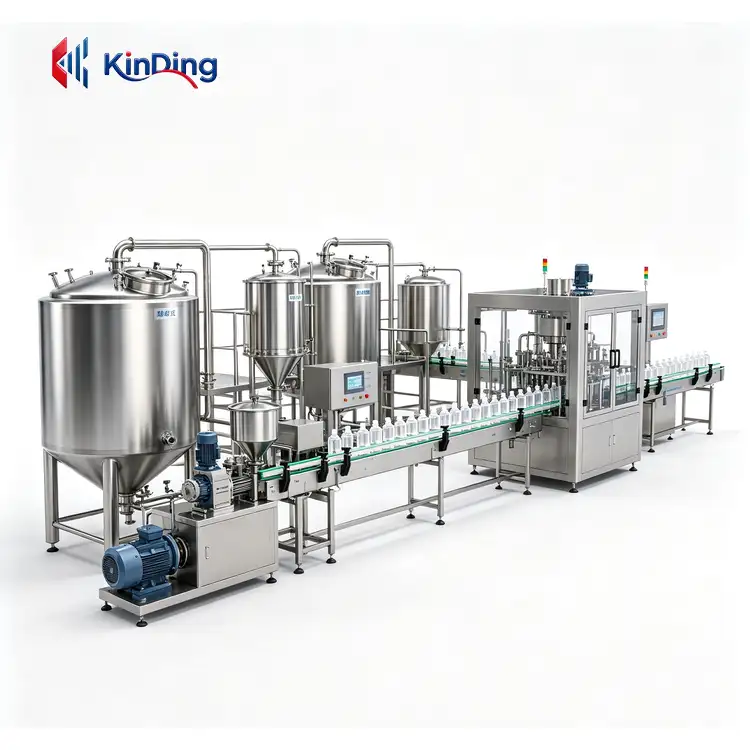
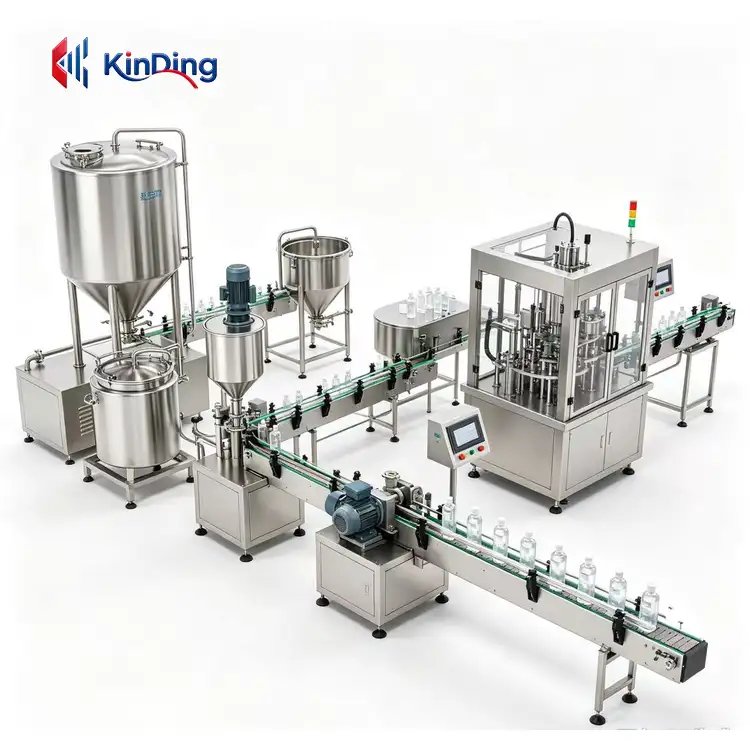
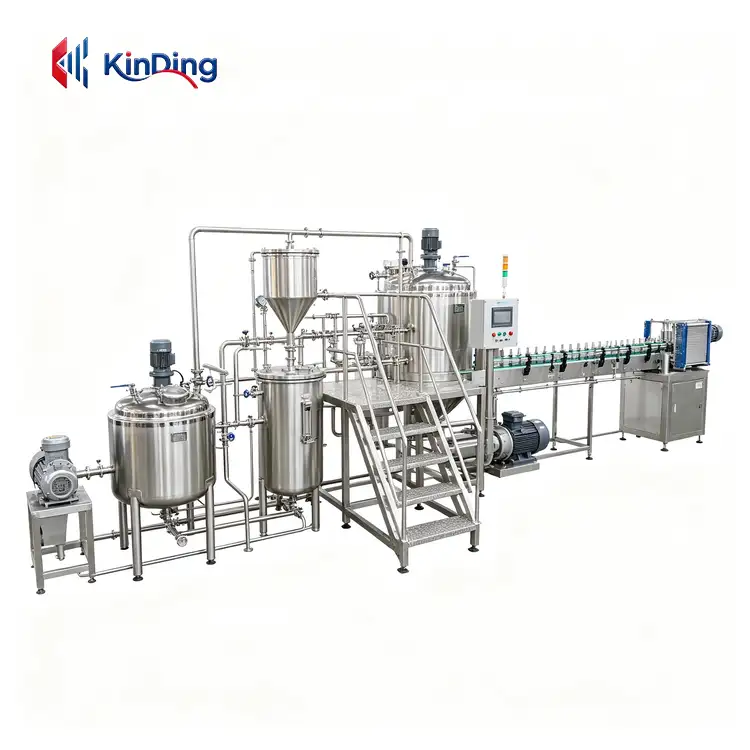
The Kinding hand sanitizer production line is suitable for the production of ordinary hand sanitizers, antibacterial hand sanitizers and hand sanitizer gels. The core equipment includes liquid mixing tanks, online emulsification pump systems and filling and capping equipment. The hand sanitizer formula is relatively simple, but it requires high requirements for the uniformity of mixing and production efficiency. The Kinding emulsification pump and emulsification tank combination system realizes continuous feeding, instantaneous emulsification and efficient discharging, with a production capacity several times that of batch equipment of the same volume. It is particularly suitable for large-scale continuous production of hand sanitizers. The liquid-powder mixer supports customization from 50L to 100,000L in capacity, meeting the production capacity requirements of different-sized factories. Purchasing Kinding hand sanitizer production equipment can obtain one-stop services from process design to installation and commissioning. Contact Kinding immediately to obtain the configuration plan and quotation for the hand sanitizer production line.
Send Inquiry
Product Description
Basic Composition and Process Flow of the Production Line
The equipment configuration of the hand sanitizer production line focuses on the four steps of "mixing ingredients - blending - filling - packaging". The entire line usually consists of a water treatment system, a mixing and dosing system, a storage system, a filling and sealing system, and a labeling and packaging system. The production process is as follows: After the raw materials are measured, they are fed into the mixing tank where they are dissolved and mixed under normal temperature or moderate heating conditions to form a uniform liquid mixture. This mixture is then sent to the storage tank for temporary storage and finally filled and sealed by the filling machine.
The design capacity of the entire line varies from several hundred bottles per hour to several thousand bottles per hour. The selection of equipment should be based on the target production volume, bottle size specifications, and the degree of automation. For new producers, it is recommended to first clarify the product positioning and expected daily production volume, and then determine the specifications of each equipment link by deduction to avoid bottlenecks such as "fast mixing but slow filling".
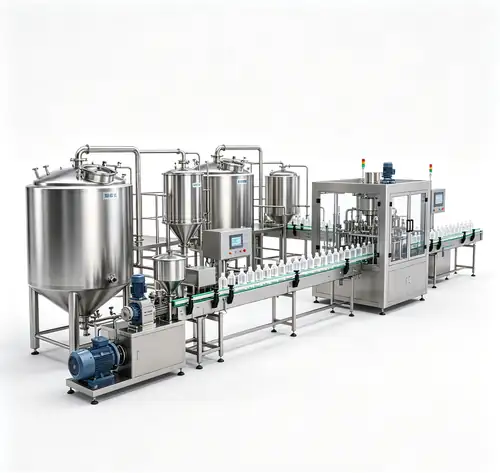
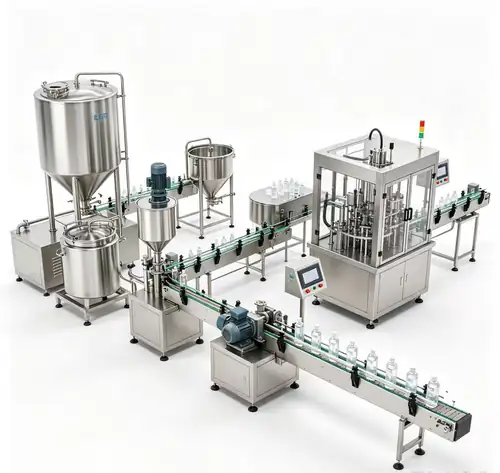
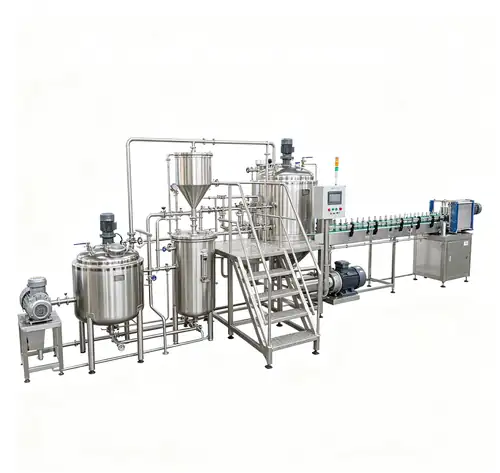
Mixing and Dosing Equipment: The Core for Ensuring Uniformity of the Material Body
The mixing and dosing system is the heart of the hand sanitizer production line. The main equipment is a stainless steel mixing tank, usually made of 304 or 316L material, with a mirror-polished inner wall and equipped with frame-type or paddle-type mixers that can be adjusted in speed. Hand sanitizer is mostly a water-based system, and the raw materials include surfactants, thickening agents, moisturizers, and fragrances, etc. The purpose of mixing is to fully dissolve and evenly disperse each component.
The mixing tank is usually equipped with a heating jacket for accelerating dissolution, with a temperature control range of normal temperature to 80°C. For products requiring higher consistency, the power of the mixer and the form of the paddles need to be strengthened accordingly, otherwise, the material may become lumpy or not be mixed evenly. Some configurations may also include a homogenization device to further refine the material through high-speed shearing, improving stability and appearance texture. The tank should be equipped with sampling ports and sight glasses for easy observation and inspection during production.
Storage and Conveying Systems: Key to Ensuring Continuous Production
The mixed material needs to be stored and transported stably, the storage tank's volume is usually larger than the single batch of mixing volume, serving as a buffer and maintaining uniformity and the material is the same as that of the mixing tank. And some configurations may include low-speed stirring to prevent material settling. The conveying section mostly uses sanitary centrifugal pumps or screw pumps, and the type of pump selected depends on the viscosity of the material - centrifugal pumps are suitable for low-viscosity hand sanitizers, while screw pumps are more suitable for high-viscosity or particle-containing formulas.
Pipeline design should minimize bends and dead ends to facilitate cleaning and avoid residual material causing cross-contamination. For enterprises with multiple product varieties, a return pipeline can be set between the storage tank and the filling machine to facilitate quick emptying and cleaning when switching formulas, reducing material waste and downtime.
Filling and Sealing Equipment: Factors Affecting Efficiency and Accuracy
Filling is the most automated section of the entire line. Hand sanitizer commonly uses bottle types such as pressurized pump bottles, flip-top bottles, and spray bottles. The filling equipment needs to match different bottle mouths and capacities. Mainly used filling machines adopt piston or flowmeter-based measurement, with filling accuracy generally controlled within ±1%, ranging from several milliliters to one liter.
Automated filling lines usually integrate bottle handling, filling, attaching pump heads or caps, and screwing caps, and are controlled by PLC to run synchronously and the filling speed is selected based on production capacity: semi-automatic equipment is suitable for flexible small-batch production, while fully automatic rotary filling machines are suitable for large-scale continuous operations. The sealing quality directly affects the product's sealing and shelf life. The force required for pump head pressing and cap screwing should be stable and controllable to avoid loose leakage or damage to the cap due to excessive force.
Auxiliary Systems and Selection Suggestions
In addition to the core equipment, the hand sanitizer production line also needs to be equipped with a water treatment system, a CIP online cleaning system and a control system. The water treatment system provides pure water that meets the formula requirements, which is the foundation for ensuring product consistency; the CIP system uses spray balls and cleaning pumps to clean the tanks and pipelines in a circulating manner, shortening production changeover time; The control system is responsible for setting and monitoring the temperature, speed, measurement, etc. parameters of the entire production line.
When selecting the equipment, it is recommended to focus on the following three points: First, whether the material and hygiene design of the equipment complies with the cosmetics production standards; second, whether the filling accuracy and operational stability meet the product requirements; third, whether the cleaning and maintenance are convenient. If conditions permit, conducting on-machine trial runs with actual formulas to verify the real performance of the equipment in terms of material viscosity and filling adaptability is an effective way to reduce investment risks.
Related Category
Stainless Steel Tank
Sanitary Pump
Mixing and Emulsification
Colloid Mill
Fruit and Vegetable Machine
Sanitary Manhole
Sanitary Valve
Sanitary Pipe Fittings
Filling Machines
Packaging Machines
Production Line Solutions
Send Inquiry
Please Feel free to give your inquiry in the form below. We will reply you in 24 hours.