

Laundry Detergent Production Line
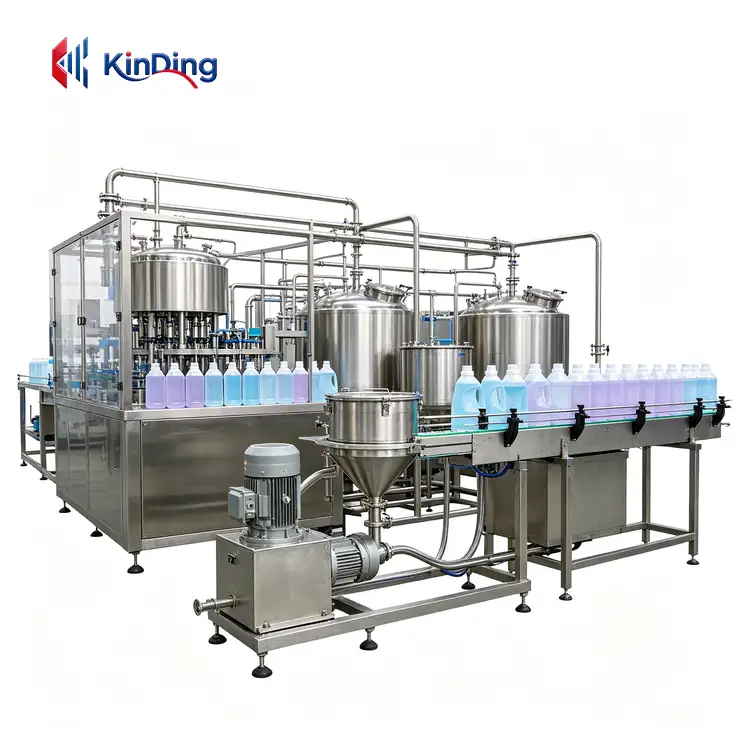
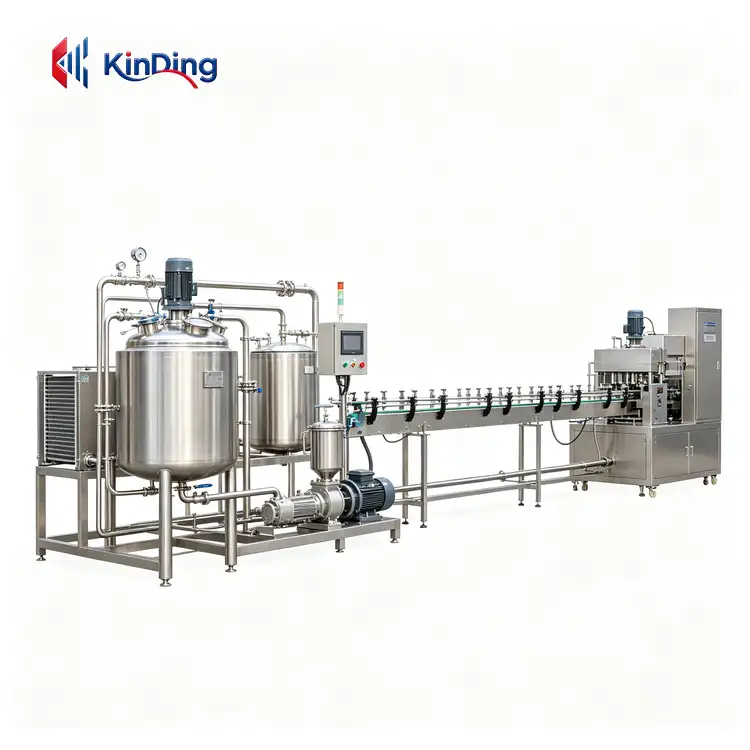
The Kinding laundry detergent production line is designed to meet the production requirements of regular laundry detergent, concentrated laundry detergent and laundry granule liquid and the core equipment includes the main mixing tank, high-speed shear emulsification system, filtration device and automatic filling line. The key to laundry detergent production lies in the thorough dissolution and dispersion of surfactants and additives. The Kinding mixing and dispersion emulsification tank integrates a high-speed dispersing disc, shear emulsification head and anchor-type wall scraping mixer, achieving seamless connection from powder and liquid mixing, particle fragmentation to uniform emulsification. Please contact us to obtain the equipment list and technical solution for the laundry detergent production line.
Send Inquiry
Product Description
Overall Architecture and Process Logic of the Production Line
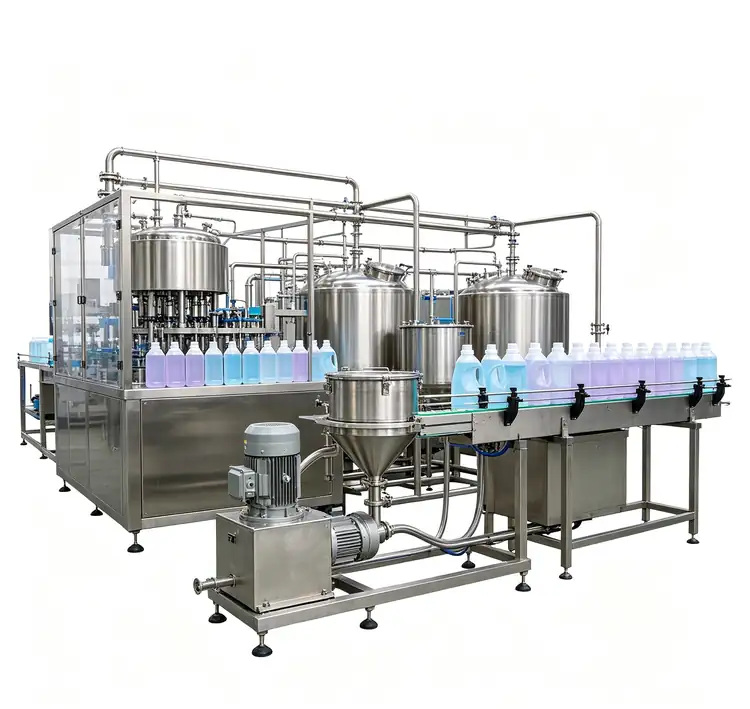
The equipment configuration of the laundry detergent production line is centered around the main process line of "mixing ingredients - blending - homogenization - filling". A complete production line usually consists of water treatment systems, raw material storage tanks, main mixing vessels, auxiliary stirring tanks, filtration systems, filling equipment, and packaging machinery.
The equipment selection primarily depends on the product type: ordinary surfactant-based laundry detergents, soap-based laundry detergents, and concentrated laundry detergents have significant differences in viscosity, foam characteristics, and formula structure, and require different requirements for stirring power, homogenization intensity, and temperature control accuracy. The overall line design needs to take into account batch production capacity, flexibility for changing products, and ease of cleaning, and is usually modularly configured based on daily production capacity or single batch volume (such as 500L, 1000L, 2000L, 5000L), facilitating subsequent expansion.
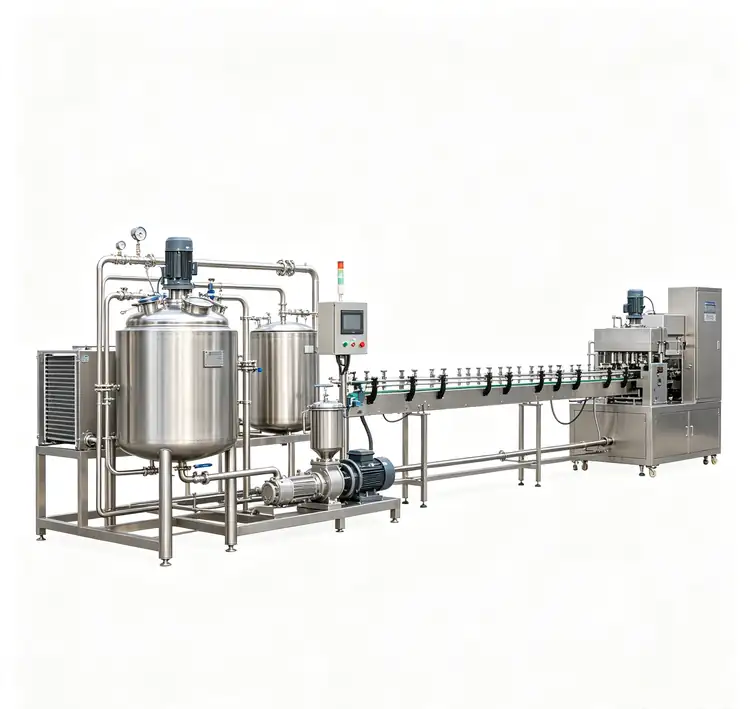
Main Mixing Equipment: Reaction Vessels and Mixing Systems
The main mixing vessel is the core equipment of the entire production line with responsible for dissolving, mixing, emulsifying, and homogenizing raw materials. The vessel body is made of 304 or 316L stainless steel with a mirror-polished inner wall, and is equipped with a jacket for heating and cooling. The common mixing system is a double-axis or single-axis structure: the low-speed scraping wall mixer is responsible for the overall circulation and preventing fouling, while the high-speed dispersion disk or homogenizer head is responsible for breaking down particles and accelerating dissolution. For high-viscosity concentrated laundry detergents, the motor power of the stirring motor needs to be increased accordingly.
Homogenization and Temperature Control System: Key to Product Stability
The homogenization system and temperature control system directly affect the transparency and storage stability of the laundry detergent. The high-speed shear homogenizer generates strong shear force through a stator-rotor structure, breaking down and dispersing the surface active agents, additives, and fragrances, preventing the product from becoming cloudy, stratifying, or precipitating.
The temperature control system uses a jacketed loop of hot or cold water to achieve heating and cooling and common process requirements involve adding surface active agents, when the water phase is heated to 60-70°C and adding fragrances and heat-sensitive components such as enzymes when the temperature drops below 40°C. The temperature control accuracy is typically required to be within ±2°C, and some high-end equipment can achieve ±1°C. The vacuum degassing function is also increasingly valued, as it can effectively remove bubbles generated during stirring and improve filling accuracy and product appearance.
Auxiliary Equipment and Material Transportation System
Although auxiliary equipment does not directly participate in the core reaction, it directly affects the operational efficiency of the production line. The water treatment system (reverse osmosis or soft water equipment) provides qualified process water for the formula. Raw material storage tanks and metering systems ensure the accurate proportioning and input of each component, reducing human error; the filtration system (bag filter or precision filter) removes mechanical impurities before filling to ensure the clarity of the product.
Filling and Packaging Equipment: The Final Link for Capacity Implementation
The selection of filling equipment should match the viscosity and packaging form of the laundry detergent, common packaging includes plastic bottles, bagged, and barrel packaging, and filling methods include gravity type, flow meter type, and servo piston type. For high-viscosity concentrated laundry detergents, servo-driven piston filling systems have higher precision and can control the filling error within ±1%; for low-viscosity products, flow meter type filling is faster.
The filling line usually integrates automatic bottle feeding, filling, cap screwing, labeling, inkjet printing, and box packaging functions, with production speeds ranging from several dozen bottles per minute to hundreds of bottles per minute. The material of the equipment should be corrosion-resistant. The parts in contact with the materials are made of 316L stainless steel. The electrical control system has the functions of fault alarm and parameter memory, which is convenient for rapid production changeover and daily maintenance. The layout of the entire line should reserve operation space and maintenance channels to ensure the stability and safety of long-term operation.
Related Category
Stainless Steel Tank
Sanitary Pump
Mixing and Emulsification
Colloid Mill
Fruit and Vegetable Machine
Sanitary Manhole
Sanitary Valve
Sanitary Pipe Fittings
Filling Machines
Packaging Machines
Production Line Solutions
Send Inquiry
Please Feel free to give your inquiry in the form below. We will reply you in 24 hours.