

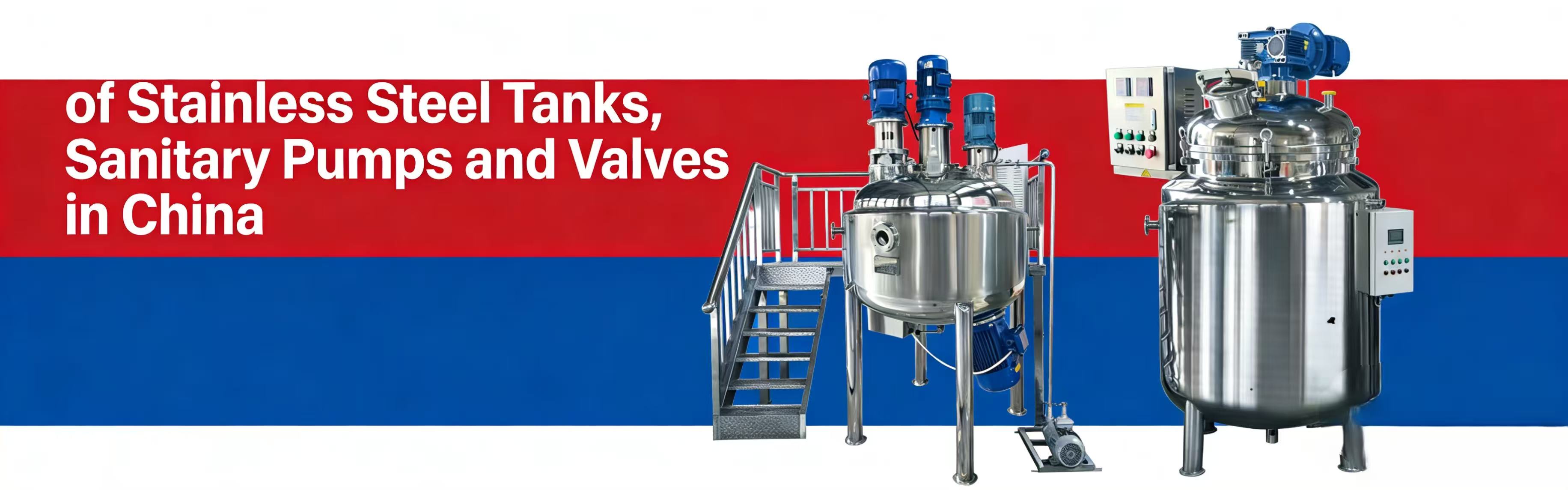
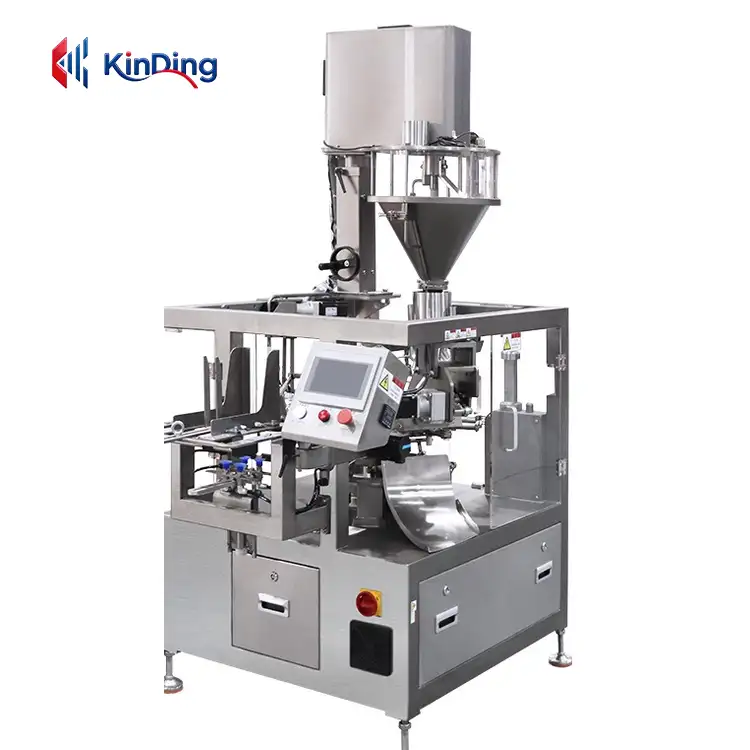
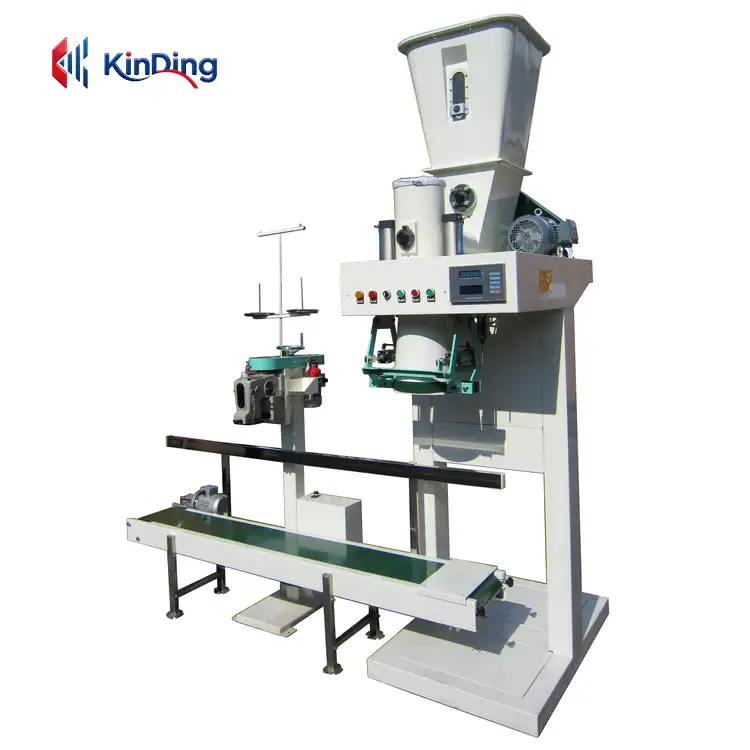
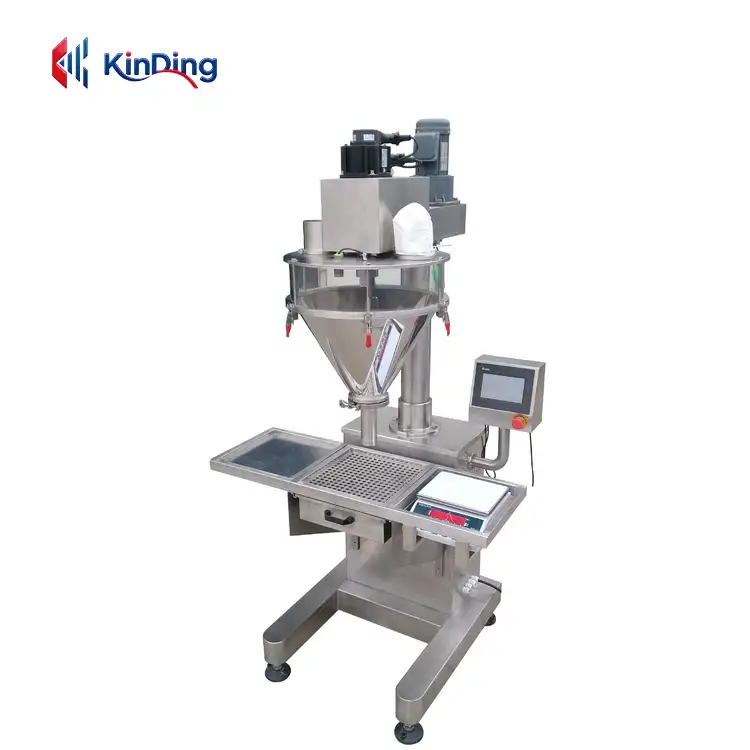
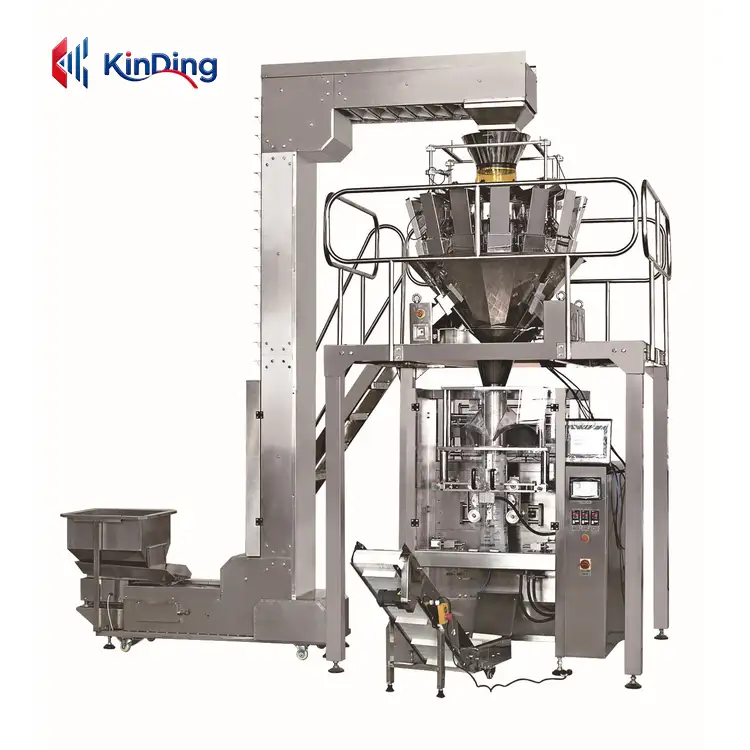
Weighing Filling Machine
The Kinding Weighing Filling Machine is a high-precision automated quantitative packaging equipment, and specially designed for powdered and granular materials. This model integrates an electronic weighing system with dual vibration feeding technology thah can complete weighing and filling operations at the same workstation. It is compatible with various materials such as spices, salt, sugar, rice, feed, seeds, laundry detergent and more. The equipment supports a wide range of weighing specifications from 100 grams to 50 kilograms, with a maximum accuracy of ±2 grams. It is widely applicable in food processing, seed handling, chemical products, and other fields for large-scale packaging production.
Send Inquiry
Product Description
Core Advantages of the Weighing Filling Machine
Integrated weighing and filling, efficiency doubled
The core design concept of the Kinding Weighing Filling Machine is to integrate the weighing and filling processes into a single workstation. The material goes from feeding to quantitative output in a continuous process without intermediate transfer steps. This design effectively shortens the bag packaging cycle and reduces the risk of material loss during the transfer process. For example, in the 100 to 1000 gram weighing range, the packaging speed can reach 18 to 25 bags per minute, balancing flexibility and production rhythm.
High-precision weighing system
The Kinding Weighing Filling Machine is equipped with high-precision digital weighing sensors and dual vibration feeding mechanisms. Through a coarse and fine two-level feeding system, it achieves precise quantification. During operation, the vibration feeding mechanism first fills to nearly the target weight with a large amplitude, then switches to a micro-vibration to compensate for the remaining deviation, and stops feeding when reaching the preset weight. This "fast filling - slow compensation" two-stage control logic effectively solves the problem of insufficient accuracy in traditional volumetric filling.
Reliable material, suitable for multiple industries
The components in contact with the materials are all made of high-quality stainless steel, with good corrosion resistance, and will not cause contamination to the materials. At the same time, they are convenient for daily cleaning and maintenance. The weighing hopper adopts a detachable design, making it convenient for operators to clean or change the material type regularly, effectively reducing the risk of cross-contamination between different batches.
This equipment can handle various non-sticky powdered and granular materials such as spices, salt, sugar, rice, feed, seeds, laundry detergent, etc. For products with good fluidity and no strong adhesion, the Kinding Weighing Filling Machine can provide stable quantitative output performance. The equipment is widely applicable in quantitative packaging operations in fields such as food processing, seed handling, chemical products, and feed production.
Modular production line configuration
The Kinding Weighing Filling Machine can be used as an independent unit or combined with feeders, conveyors, heat sealing machines, sewing machines, and electrical control cabinets to form a complete weighing filling production line. The equipment provides multiple feeding options for selection:
- Hopper feeding: suitable for small workshops or single-machine operation scenarios, with simple and direct manual feeding
- Vacuum feeding: suitable for occasions with high requirements for closed conveying, reducing dust spillage
- Screw feeding: suitable for powdery materials, with a smooth and uniform conveying process
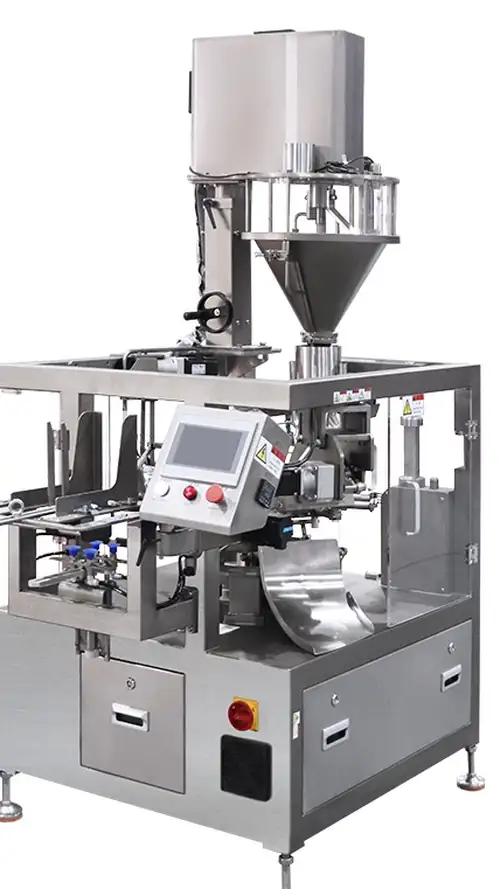
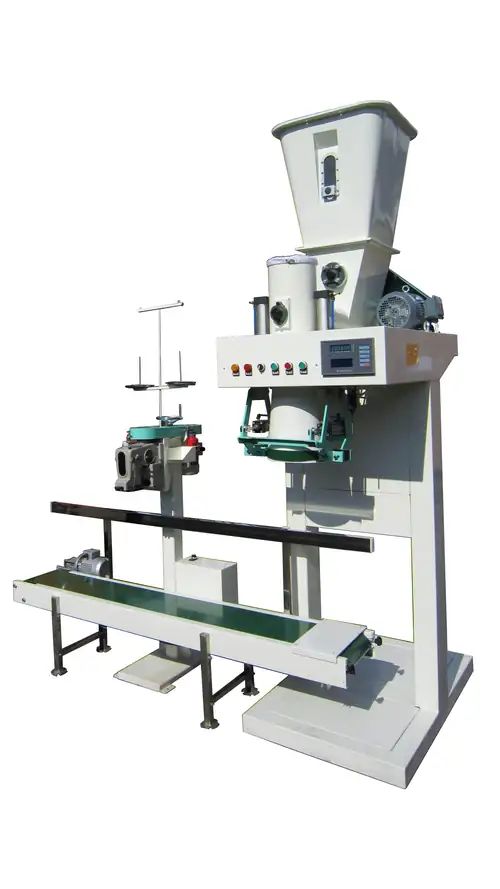
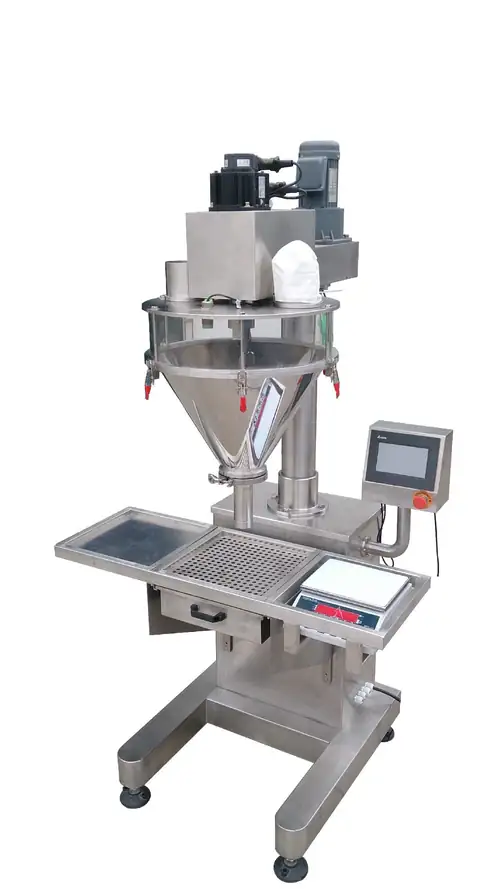
Technical parameters of the Weighing Filling Machine
- Model Weighing range Tolerance Speed (bags/minute) Power
- KDWB-1 100-1000g <2g 18-25 250W
- KDWB-2 200-2000g <4g 12-25 600W
- KDWB-6 500-6000g <8g 11-20 630W
- KDWB-10 1-10kg <10g 8-18 680W
- KDWB-25 5-25kg <15g 7-10 700W
- KDWB-50 10-50kg <30g 5-8 730W
Applicable Scenarios of Weighing Filling Machines
Food Processing Field
In the food processing scenario, Kinding weighing filling machines are commonly used for quantitative filling of seasonings, sugar, salt, rice products, etc. The stainless steel contact components of the equipment meet food hygiene requirements, and the weighing accuracy can meet the regulatory demands for the net content labeling of pre-packaged foods. For sugar, salt, etc., which are prone to moisture absorption, the double-vibration feeding mechanism can effectively reduce bridging and blockage phenomena, ensuring smooth feeding.
Seed and Agrochemicals Field
Seed processing requires high precision in quantitative measurement. Large weight deviations may affect the uniformity of sowing. Kinding weighing filling machines can maintain a tolerance of less than 15 grams within the 5 to 25 kilogram specifications, suitable for seed quantitative packaging and feed division operations. The equipment has good adaptability to granular materials, and rice, seeds, etc., with good fluidity, can be processed smoothly.
Chemical and Cosmetics Field
In the packaging of chemical products, the quantitative filling of laundry powder, dry powder materials, etc. is also applicable. The stainless steel material of the equipment has certain tolerance for weakly corrosive powders, and the weighing over-limit alarm function helps to control raw material loss. For chemical powder particles with good fluidity and no strong adhesion, Kinding weighing filling machines can provide stable quantitative output performance.
Operation and Maintenance
The equipment uses a microcomputer control system, and weighing parameters can be set and adjusted through the operation panel. Daily maintenance mainly involves the regular cleaning of the weighing hopper, the inspection of the vibration feeding mechanism, and the calibration of the weighing sensor. The weighing hopper adopts a hook-type or detachable design, and can be disassembled and cleaned without professional tools. It is recommended to formulate a regular calibration plan based on usage frequency and use standard weights to calibrate the weighing system to ensure the stability of measurement in long-term use.
Related Category
Send Inquiry
Please Feel free to give your inquiry in the form below. We will reply you in 24 hours.