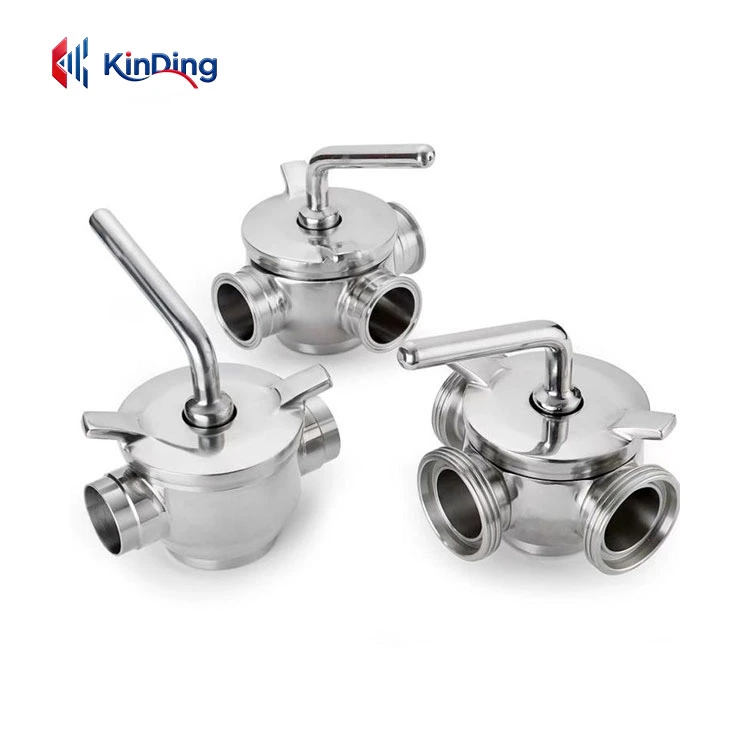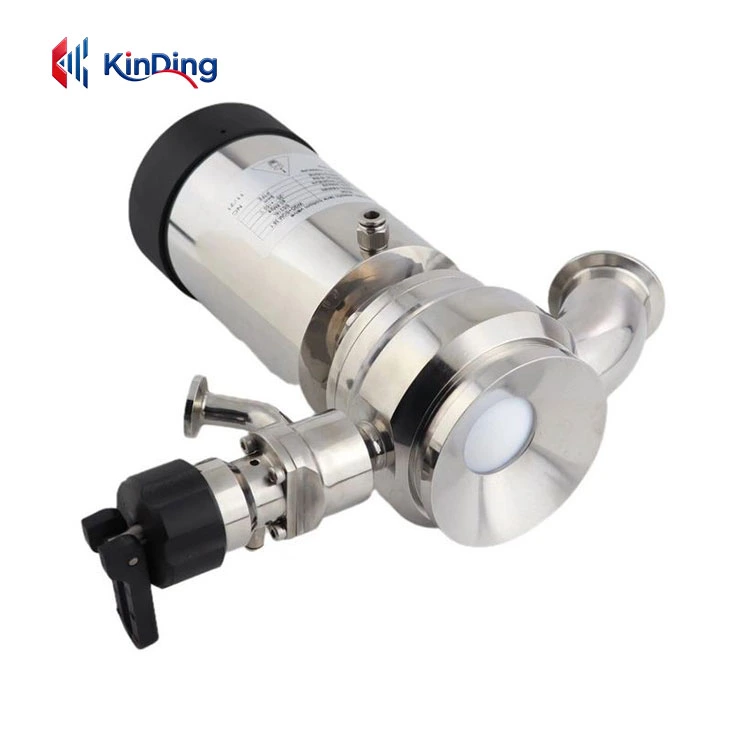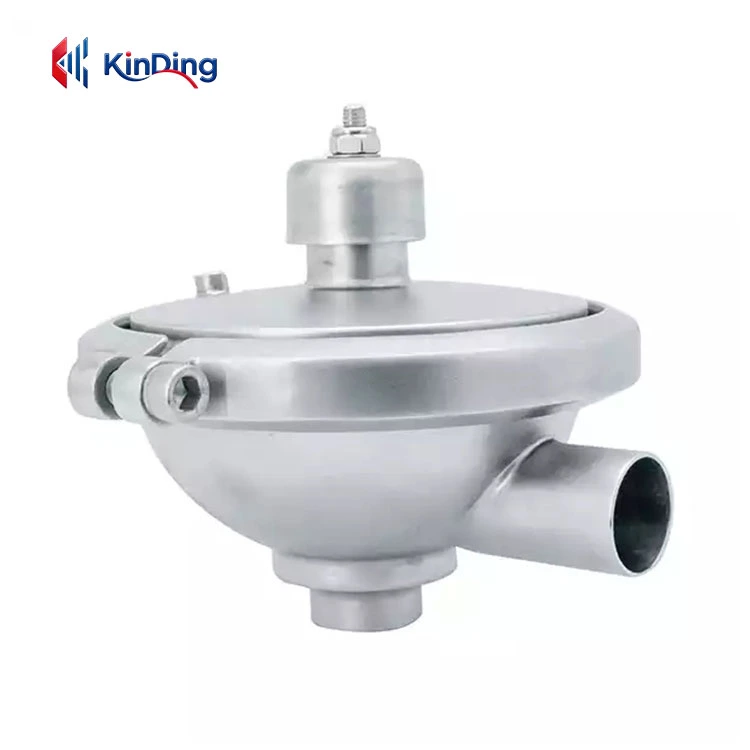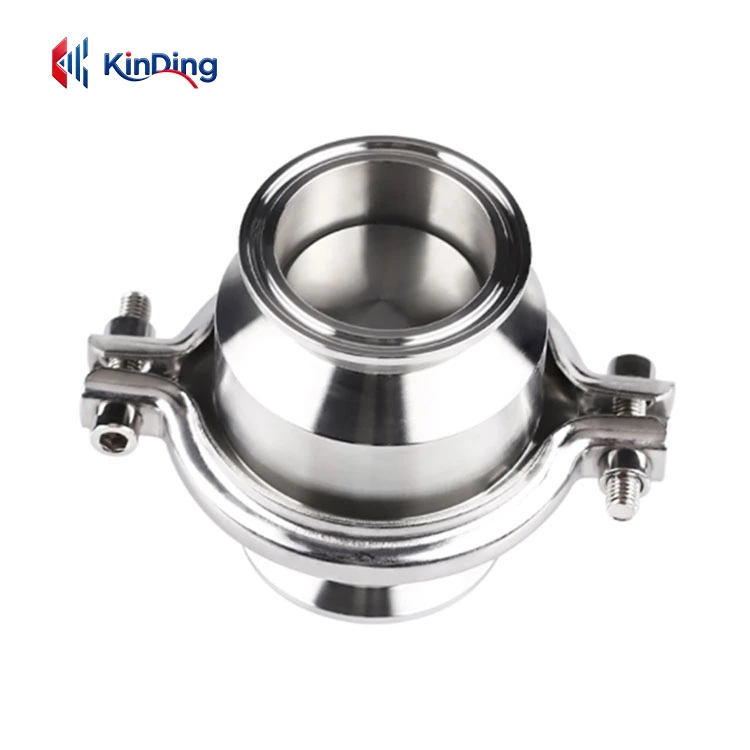
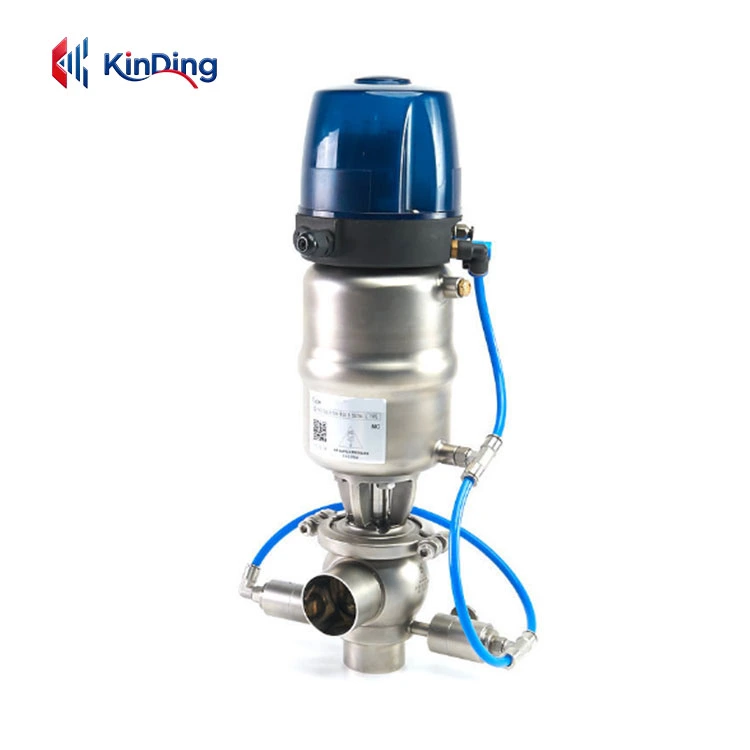
Sanitary Anti-Mixing Valve
In the production processes of industries such as food, dairy products, beverages, biopharmaceuticals and fine chemicals, cross-contamination of different media is one of the most critical risks to be guarded against in quality control. In a single pipeline, various media such as raw materials, semi-finished products, cleaning solutions, steam, etc. may be transported simultaneously. How to achieve independent transportation of multiple media in a limited space and ensure that they do not interfere with each other? The answer is the sanitary anti-mixing valve - Sanitary Anti-Mixing Valve.
Send Inquiry
Product Description
What is a sanitary anti-mixing valve?
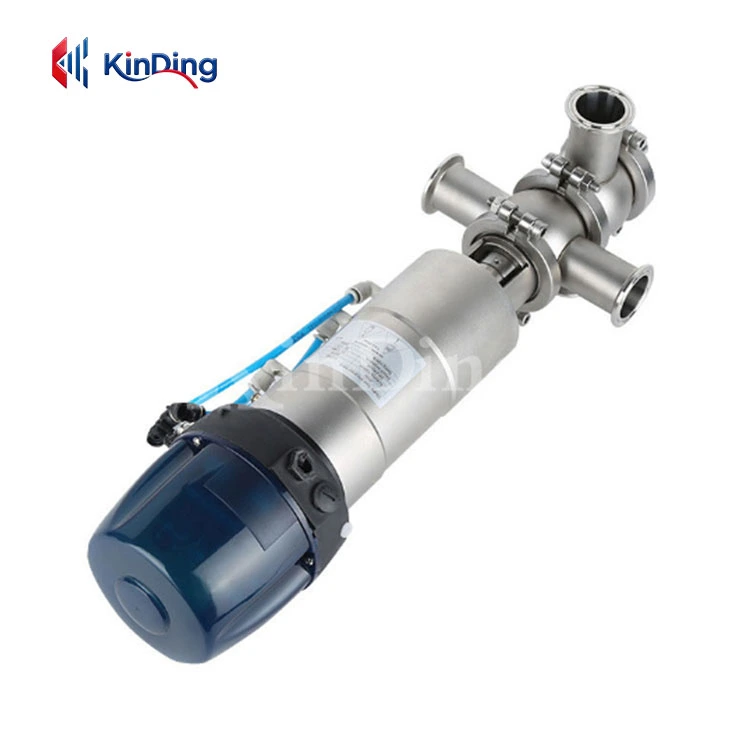
A sanitary anti-mixing valve is a specific type of valve device designed to prevent different fluids from mixing in the pipeline system. Unlike ordinary reversing valves, the anti-mixing valve uses a double-seat structure and an independent leakage chamber design to ensure that even if one seal fails, the two media will not be cross-contaminated. Wenzhou Kinding Machinery Co., Ltd., as a professional manufacturer of stainless steel tanks and sanitary pump valves, has accumulated rich technical experience in the field of Sanitary Anti-Mixing Valve. We have transformed this seemingly complex product into an indispensable "safety guardian" in the production lines of the food and pharmaceutical industries.
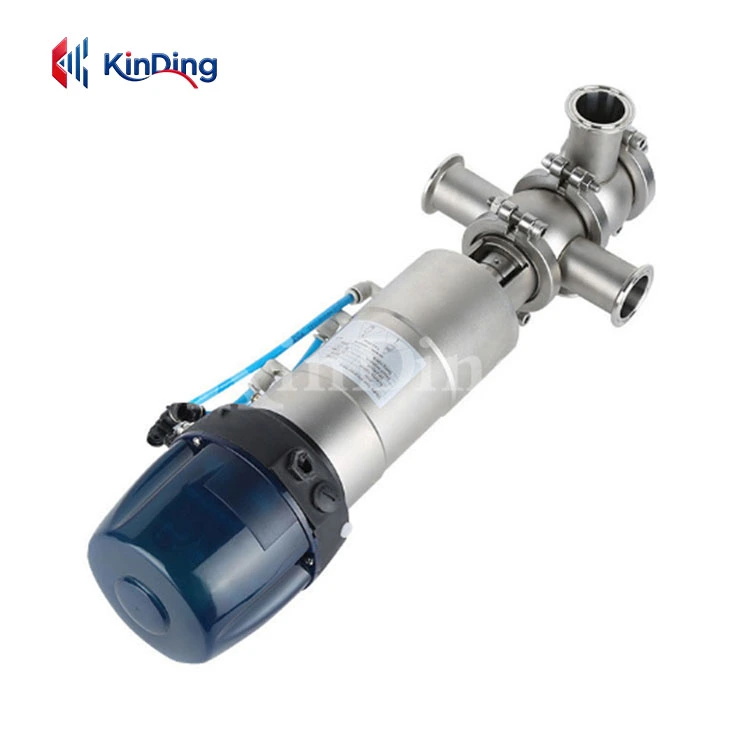
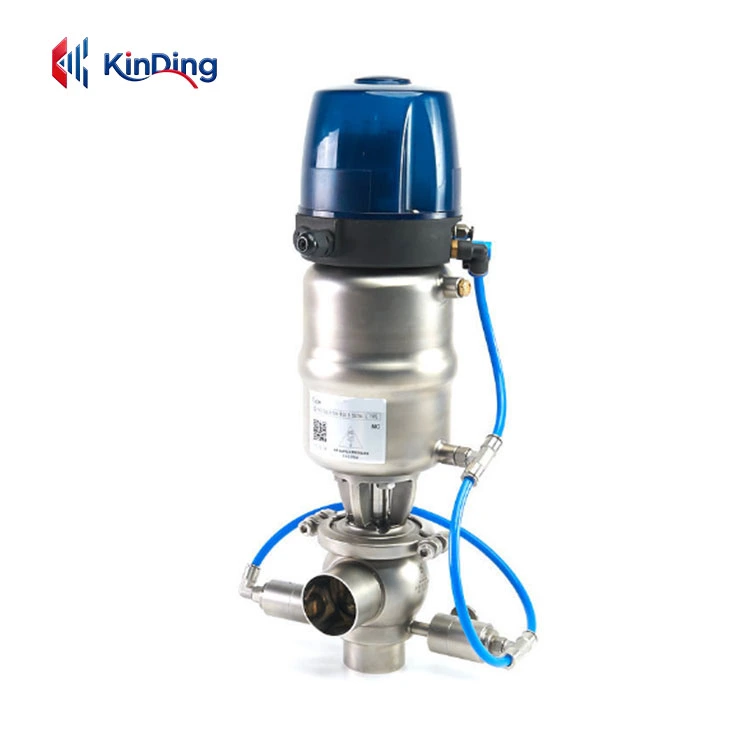
The core structure of the anti-mixing valve: double-seat double-sealing
To understand the working principle of the Sanitary Anti-Mixing Valve, one must first recognize its most crucial innovative design - the double-seat double-sealing structure. In traditional single-seat valves, there will inevitably be a small amount of medium remaining in the valve chamber when switching media. When the next batch of medium passes through, the residue may be carried in, causing cross-contamination. However, the Sanitary Anti-Mixing Valve has two independent sealing points, which separately isolate the upstream and downstream media. Between the two sealing points, there is an open leakage chamber (or called "leakage cavity").
The role of this leakage chamber is crucial: if one of the seals leaks, the leaked medium will not enter the other side of the pipeline but will be safely discharged through the leakage chamber or detected by the sensor. This "double insurance" structure fundamentally eliminates the possibility of different media mixing.
The Difference Between Anti-Mixing Valves and Ordinary Diverting Valves
When many customers first encounter these valves, they often ask: What is the difference between Sanitary Anti-Mixing Valve and the ordinary Sanitary Divert Valve?
In simple terms, ordinary diverting valves are mainly used to change the flow direction of a single medium and are suitable for switching between different pipelines of the same medium. However, the core mission of anti-mixing valves is to prevent the mixture of two different media. Therefore, they are mostly used at the junction of CIP cleaning systems and product transportation systems, at the nodes where different product formulations are switched, and in complex pipelines where multiple media need to be connected simultaneously.
For example: On a dairy production line, a pipeline may need to transport both milk and CIP cleaning fluid. If an ordinary diverting valve is used, once the seal ages, the cleaning fluid may seep into the milk pipeline. But with a Sanitary Anti-Mixing Valve installed, even if the seal fails, the leaked cleaning fluid will be discharged from the leakage cavity and will never contaminate the milk. This safety redundancy design is precisely the irreplaceable value of anti-mixing valves.
The strict standards for hygiene-level design As a hygiene-level equipment, the manufacturing standard of Sanitary Anti-Mixing Valve exceeds that of ordinary industrial valves. The anti-mixing valve produced by Kinding is made of high-quality 316L stainless steel. The inner wall is precisely polished to Ra ≤ 0.4 micrometers, completely eliminating the dead corners where bacteria can breed. The internal flow channels of the valve body have been optimized, without any threads or groove structures, ensuring that the CIP cleaning solution can thoroughly rinse every contact surface without any blind spots.
The sealing ring is the "heart" of the anti-mixing valve. Kinding selects imported EPDM, FKM or PTFE materials, with a temperature resistance of over 150℃, excellent corrosion resistance, and compliance with FDA and USP Class VI certification requirements. Whether it is high-temperature steam sterilization or strong acid-base cleaning, these sealing rings can maintain a long-term stable sealing effect.
What is particularly noteworthy is that Kinding's anti-interference valve can be equipped with a leakage chamber sensor. When there is any medium leakage into the leakage chamber, the sensor will immediately send out an alarm signal, alerting the operators to promptly inspect and maintain, thus eliminating potential risks at an early stage. This "active warning" function provides a higher level of safety guarantee for sterile production.
Application scenarios of Sanitary Anti-Mixing Valve
1. CIP cleaning system: Prevents cleaning solution from contaminating products at the junction of cleaning solution and product conveying pipelines.
2. Multi-product co-line production: Avoids cross-contamination when switching different formula products in the same pipeline.
3. Aseptic filling line: Sets an anti-mixing valve at the front end of the filling head to ensure independent products of different batches.
4. Fermentation and cell culture: Used at the switching points of various media such as culture medium, feed, and defoamer.
5. Pharmaceutical preparation system: Provides safe isolation on the distribution pipelines of buffer solution, medicinal liquid, and cleaning solution.
How to choose the appropriate anti-mixing valve?
When selecting the Sanitary Anti-Mixing Valve, the following key factors need to be considered:
1. Diameter specification: Determine the valve size based on the pipeline flow rate. Kinding offers a full range of specifications from DN25 to DN150.
2. Connection method: Various connection methods such as clamps, welding, and threads are available, suitable for different pipeline systems.
3. Actuator type: Pneumatic or electric, choose according to the on-site air source conditions and control requirements.
4. Sealing material: Select the appropriate sealing material based on the medium temperature and acidity/alkalinity.
5. Leakage cavity function: Whether to equip a leakage sensor for intelligent monitoring.
Kinding's Professional Commitment
As a professional manufacturer of sanitary equipment, Kinding conducts rigorous post-production inspections for every Sanitary Anti-Mixing Valve, including strength tests of the shell, double-seat sealing tests, leakage cavity sealing tests, and action cycle tests. We provide complete material certificates, surface roughness reports, and factory test records to meet the strict compliance requirements of the pharmaceutical and food industries. More importantly, Kinding has a complete industrial chain from tank manufacturing to valve production, which enables us to offer customers an overall solution package from tank bottom valves, anti-mixing valves to pipeline systems, ensuring the compatibility and interoperability of each link.
Hot Tags: China Sanitary Anti-Mixing Valve Manufacturer , Supplier
Related Category
Stainless Steel Tank
Sanitary Pump
Mixing and Emulsification
Colloid Mill
Fruit and Vegetable Machine
Sanitary Manhole
Sanitary Valve
Sanitary Pipe Fittings
Send Inquiry
Please Feel free to give your inquiry in the form below. We will reply you in 24 hours.